Are Stretch Film and Cling Film the Same? A Comprehensive Comparison
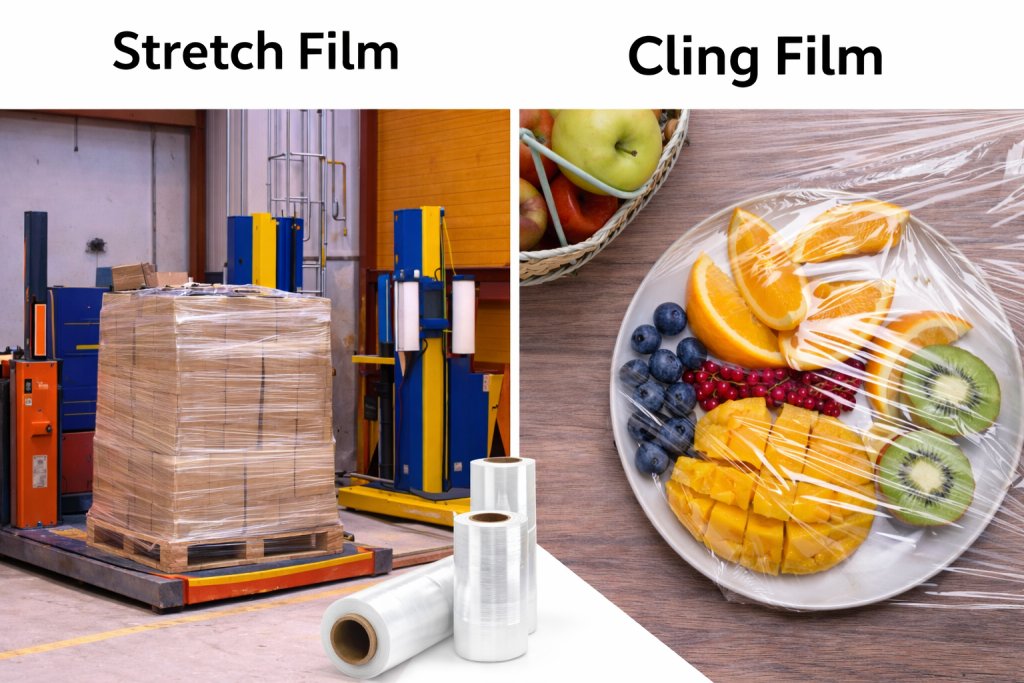
If you believe that stretch film and cling film are the same, you should think again. In fact, these are two distinct packaging options available. They are used in different ways since their purpose and qualities are different from each other.
Do you know that if you’re packing boxes, storing food, or even just helping your parents in shifting the house, if you use the wrong film, you might mess things up?
Today, I’m going to explain this in simple terms. First, you will get to know exactly what these two materials are, and then you will get a brief side-by-side comparison. So, it wouldn’t be wrong to say that by the end, you’ll recognize the difference between stretch film and cling film.
If you want to upgrade how you pack and protect your products, you should choose Allpack Packaging Technologies. We are the top supplier of packaging machinery across Australia. Additionally, we back it up with expert support as well.
So, without extending this any further, let’s understand the basics first:
What Is Stretch Film?
Stretch film is made from linear low-density polyethylene (LLDPE). In simple terms, it’s flexible and is designed to stretch without tearing easily.
It is a strong, elastic plastic wrap mainly used for packing, securing, and shipping goods. You’ll see it in warehouses, removal trucks, and retail storage areas.
You have to understand that stretch film works using tension. So, when you pull it tight around boxes or furniture, it stretches and tries to shrink back. Actually, that shrinking force holds everything firmly in place.
You might have seen it as:
- Large stretch film rolls that are used in warehouses
- Clear wrap for normal loads
- Black stretch film, which is popular for hiding products and protecting them from sunlight
- Applied by hand or using a stretch film wrapper machine
Moreover, plastic stretch film is an important product for businesses because they rely heavily on it to secure pallets before shipping. Without it, there is a high chance that boxes might fall or get damaged during transport.
If you’re wondering how stretch film compares to another common option, see our shrink wrap vs stretch wrap comparison to find out which suits individual product sealing versus pallet loads.
What Is Cling Film?
Cling film is usually made from polyethylene (PE) or sometimes polyvinyl chloride (PVC). It’s designed for food safety and short-term sealing. In comparison to stretch film, it’s softer and thinner. Another difference is that it sticks to surfaces using light adhesion instead of strong tension.
In Australia, people usually call it plastic wrap or Glad wrap. You must have seen it in your kitchen drawer. You can use it to:
- Cover bowls
- Wrap your sandwiches or other food items.
- Seal leftovers
- Keep air away from food
To understand both of them, think of these two as if stretch film is built for warehouses, and cling film is built for your fridge.
Stretch Film vs Cling Film
Now that you have a basic idea of both films, let’s move further to understand the differences. Have a look:
Strength and Thickness
Stretch film is relatively tough and thick, so you can use it on heavy stuff or things with sharp edges. On the other hand, cling film is much thinner, and also, it is more delicate. So, you have to handle it very gently. Otherwise, it will tear easily.
So, a stretch wrap film will be ideal for you if you’re wrapping heavy boxes instead of a kitchen wrap.
Main usage
Stretch film is designed for the following:
- You use it for load containment, so everything stays in place.
- You rely on it for shipping stability to keep things steady.
- It’s useful for bundling furniture safely.
- You can protect your stuff during transport.
In contrast, cling film is designed for the following purposes:
- Food freshness
- It also helps you in maintaining hygiene by protecting surfaces.
- You can provide a light covering for your stuff.
How They Hold Things
You can see there’s a big difference between the two in holding things. Stretch film holds your items by tension, and when you stretch it tight, it squeezes the load and keeps everything stable. While cling film is different because it just sticks to surfaces.
One wraps tightly, and the other only lightly sticks.
Roll Size and Application
You’ll never see someone wrapping a pallet with kitchen wrap, and similarly, it wouldn’t make sense to wrap leftovers with industrial film.
Stretch film comes in big rolls because of its industrial use. Companies buy it in bulk for daily packing. Cling film is smaller and is made mostly for household usage.
Quick Comparison
Feature | Stretch Film | Cling Film |
Main Purpose | Secures heavy loads, pallets, and furniture during transport | Seals and protects food from air exposure |
Strength & Thickness | Thick, strong, and tear-resistant | Thin, soft, and tears easily |
How It Works | Uses tension and compression to hold items tightly | Uses surface cling to stick lightly to containers |
Typical Use Area | Warehouses, shipping, and moving jobs | Kitchens, food storage, home use |
Roll Size | Large industrial rolls | Small household rolls |
Food Safety | Not always food-grade unless specified | Designed for direct food contact |
When You Should Use Stretch Film
Remember, use stretch film when you need real strength. For example:
- Moving house
- Securing stacked boxes
- Bundling loose furniture parts
- Warehouse pallet wrapping
- Protecting items during transport
Many removalists use stretch film for moving because it keeps doors and drawers closed without damaging furniture. You can also wrap carpets or cover surfaces during renovations with it. It is important to mention that businesses really rely on it because without a stretch film, there is a high chance of damage during transport. At the end, it’s all about keeping loads stable, strong, and protected.
When You Should Use Cling Film
Cling film isn’t designed for long-distance transport. It’s mainly for your kitchen, and it won’t handle heavy stretch. So, use cling film when food is involved.
It will help you to:
- Seal containers
- Slow down food spoilage
- Protect from air exposure
- Maintain hygiene
Can You Swap Them?
You must know that stretch film isn’t always food-grade. Industrial chemicals in it aren’t made to touch food directly. Cling film, meanwhile, isn’t strong enough to handle heavy transport loads. So, is it ok to swap them?
Technically, you could try.
Practically, it’s not recommended.
Remember, if you use the wrong one, there will be a high risk of:
- Product damage
- Food contamination
- Wasted money
- Frustration
So it is safe to say that they’re not interchangeable.
Conclusion
Now you understand how they’re different. The next time you spot both rolls together, you won’t feel confused. You’ll know exactly which one fits your needs. Stretch film is made for strength, shipping, and keeping things protected. While cling film is made to keep your food fresh and sealed. And to be honest, after knowing these small differences, you will definitely make better choices, and you will save your time and money.
You should choose Allpack Packaging Technologies to get reliable packaging machines. We are committed to delivering reliable, high-quality packaging equipment across Australia. So, without wasting time, just get in touch with us.