
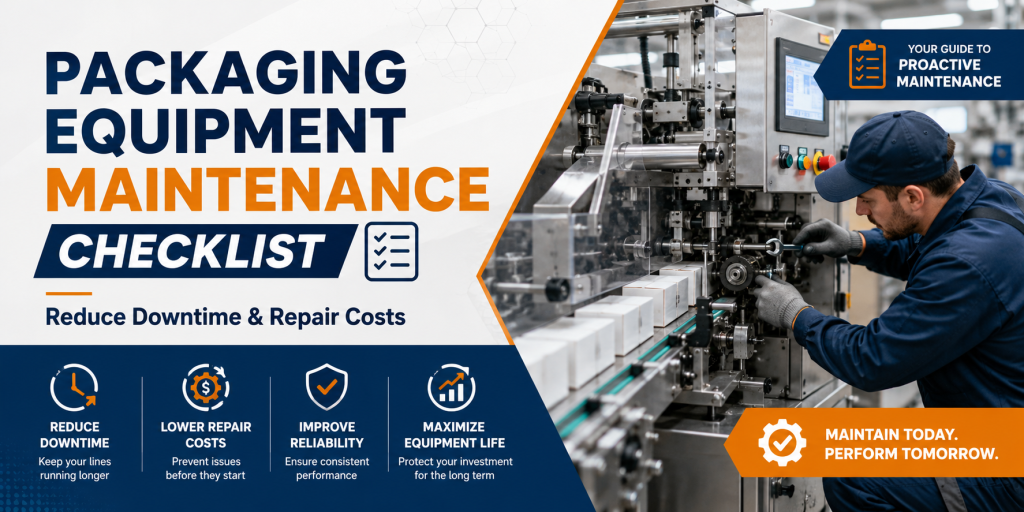
Regular packaging machine maintenance helps reduce unexpected downtime, extend equipment lifespan and lower repair costs. Studies show that preventative maintenance can reduce unexpected downtime by up to 80%, while even a 1% drop in packaging equipment productivity can reduce profits by almost 3%.
This guide breaks down exactly what to check daily, weekly, monthly, quarterly, and annually, across every major type of packaging machine, so you can catch small issues before they become expensive ones.
We have supplied and supported packaging machinery across Western Australia since 2000, and this practical maintenance checklist reflects what we see in the field, not just theory pulled from a manual.
Complete Packaging Machine Maintenance Checklist
Here is the full packaging machine maintenance checklist broken down by frequency, so you can see at a glance what needs attention and when.
| Maintenance Frequency | Key Tasks |
| Daily | Clean, inspect, lubricate, check sensors |
| Weekly | Tighten components, inspect belts, test safety devices |
| Monthly | Calibrate machines, inspect electrical connections |
| Quarterly | Replace worn parts, inspect motors |
| Annually | Professional servicing and full system inspection |
Now let us break each of these five intervals down into the specific tasks your team should be running through.
Daily Packaging Machine Maintenance Checklist
A few minutes of checks each day catches the problems that would otherwise accumulate into a Monday morning meltdown. Most faults on the packing line may be traced back to a missed daily inspection, not a single catastrophic failure.
Before you start each day’s production run, perform this packing machine maintenance routine:
- Clean machine surfaces of product residue and accumulation
- Dust off surrounding moving parts and sensors
- Examine moving components for unusual movement or resistance
- Check sensors to ensure they are reading correctly
- Inspect emergency stops working and accessible
- Check for leaks on seals, hoses and fittings
- Check electrical cables for fraying, heat damage, or looseness
- Lubricate any locations that need regular attention
- Test the machine before you sign up for a full production run
Record any irregularities in your maintenance journal immediately, rather than waiting until the conclusion of your shift.
Weekly Packaging Equipment Maintenance Tasks
Weekly checks go one level deeper than the daily walk-around, checking items that wear out over time rather than break suddenly. A good weekly packaging equipment maintenance schedule includes:
- Check belt for fraying, slipping or misalignment
- Inspect rollers for flat spots or uneven wear
- Check chain tension to avoid skipping or jamming
- Inspect and re-tighten fasteners as needed
- Check pneumatic systems for leaks or pressure drops
- Examine air pressure against manufacturer specifications
- Check safety guards are secure and undamaged
- Make minor calibration adjustments as needed
Monthly & Quarterly Preventive Maintenance Checklist
This is where a preventative maintenance checklist comes into play to preserve your equipment on a structural, not simply a surface, level.
Monthly Maintenance Tasks:
- Complete calibration check on all automatic settings
- Check bearings for wear or noise
- Check drive system for smooth, consistent operation
- Check electrical connections for corrosion or looseness
- Apply firmware and software updates where applicable
- Check wear parts and flag for imminent replacement
Quarterly Tasks:
- Replace consumable parts before failure
- Thorough cleaning of interior and hard to reach areas
- Check motor for heat, noise or loss of performance
- Inspect gearbox for oil level and condition
- Benchmark output performance testing
- Production accuracy checked against goal parameters
This is the level of industrial packing machine maintenance that distinguishes a product line that runs reliably for a decade from a line that is always in emergency repair.
Annual Maintenance: When to Schedule Professional Servicing
Even the most disciplined in-house maintenance program needs a professional set of eyes once a year. Annual servicing catches the issues that only show up under full diagnostic testing, and it is usually a requirement for keeping manufacturer warranties valid. A proper annual service should include:
- Full equipment inspection across every subsystem
- Component replacement for anything nearing end of life
- Performance testing under real production conditions
- Electrical inspection of wiring, panels, and connections
- Safety compliance checks against current standards
- Confirmation against OEM recommendations for your specific machine
If your annual service is coming up or overdue, Allpack’s WA-based technical support teams can carry out a full inspection and get your equipment back to peak condition without the guesswork.
Following this checklist will keep most problems from surfacing at all. But it helps to know what the warning signs look like when something does slip through.
Download the FREE Packaging Machine Maintenance Checklist PDF
Common Signs Your Packaging Machine Needs Maintenance
Even with a solid checklist in place, machines will occasionally send warning signals before something breaks down completely. Knowing what each sign points to lets you act before a minor issue becomes a full production stoppage.
| Warning Sign | Possible Cause |
| Strange noises | Bearing wear |
| Slow production | Drive issues |
| Poor seals | Heating element |
| Misaligned packages | Sensor issues |
| Frequent jams | Build-up or worn parts |
| Inconsistent wrapping | Tension problems |
Use this table as a fast first check whenever your line starts behaving differently. If the cause is not obvious once you have ruled out the items above, it is worth getting a technician to assess packaging machine performance before running the machine further.
The right maintenance approach also depends heavily on the type of packaging machine you are running.
Maintenance Requirements by Packaging Machine Type
Every type of packaging machine wears differently, so a generic checklist only gets you so far. Here is what actually matters for each major machine category we supply and support across Perth and WA.
| Machine Type | Key Maintenance Tasks | Common Wear Parts | Inspection Frequency |
| Pallet Wrappers | Check film tension, turntable alignment, and carriage rollers | Turntable bearings, drive belts, film carriage rollers | Weekly |
| Continuous Bag Sealers | Inspect heat elements, conveyor belt tracking, temperature control | Heating elements, PTFE tape, conveyor belts | Weekly |
| Bag Sewing Machines | Check needle condition, thread tension, and stitching consistency | Needles, thread guides, drive belts | Weekly to monthly |
| Carton Sealing Machines | Inspect tape head tension, drive rollers, and adhesive application | Tape head rollers, drive belts, blades | Weekly |
| Strapping Machines | Check tension settings, sealing head, and strap feed path | Sealing heads, feed rollers, tension pads | Monthly |
| Automated Packaging Systems | Full sensor calibration, PLC checks, and conveyor synchronisation | Sensors, PLC components, conveyor drives | Monthly to quarterly |
Matching your machinery maintenance schedule to the specific automatic packing machines on your line, rather than applying one blanket routine, is one of the fastest ways to reduce avoidable breakdowns.
Packaging Machine Maintenance Tips to Improve Efficiency
Beyond the checklist itself, a few operational habits make a real difference to how long your equipment lasts and how well it performs day to day:
- Train operators properly so small issues are caught early, not ignored
- Keep detailed maintenance logs to spot recurring problems before they escalate
- Use quality consumables rather than the cheapest available option
- Replace worn parts early instead of running them to failure
- Follow manufacturer recommendations for service intervals and settings
- Avoid overloading equipment beyond its rated capacity
- Schedule preventative servicing in advance rather than reacting to breakdowns
- Keep critical spare parts on hand so downtime is measured in hours, not days
These habits, combined with the checklist above, are what genuinely move the needle on packaging machine efficiency over the life of your equipment.
Ultimately, structured packaging machine maintenance isn’t just about preventing breakdown; it’s about protecting production, improving efficiency and extending the life of your equipment. If you’re ready to take a more proactive approach, expert support can make the process even easier.
Reduce Operating & Repair Costs by Up to 25% with Expert Packaging Equipment Support from Allpack Tech
Allpack Packaging Technologies has supported Perth and WA businesses with reliable machinery and genuine technical backup for decades. Whether you need a one-off inspection or an ongoing maintenance arrangement, our WA-based technicians know this equipment inside and out.
Talk to OurTechnical Support Team
FAQs
How often should I perform maintenance on my packaging machine?
Most packing machines require daily visual checks, weekly component checks, monthly calibration, quarterly deep servicing and a full expert service once a year. That will depend precisely on the type of equipment you have and how hard it is running.
What happens if I skip packaging machine maintenance?
If you skip maintenance, your components will wear out faster, you’ll have more breakdowns, your product quality will suffer and repairs will cost you more in the long run. It also increases the possibility of a total, unscheduled shutdown of production.
What are the benefits of a packaging equipment maintenance checklist?
A packaging equipment maintenance checklist minimises downtime, increases equipment longevity, decreases repair costs, enhances safety, and maintains consistent output by identifying minor faults before they become a major malfunction.
Can preventative maintenance really reduce downtime?
Yes. Well-structured preventative maintenance programmes have been found to reduce unexpected downtime by as much as 80%, mainly by spotting wear and problems before they cause a full stoppage.
What should I do if my packaging machine frequently jams?
Frequent jams are mainly caused by product build-up, worn feed components or misaligned pieces. Clean the problematic region, then inspect rollers, guides and sensors for wear or misalignment.
How do I know if my packaging machine needs repair vs replacement?
Sometimes malfunctions are increasing in frequency, expenses of repair are rising or replacement parts are difficult to obtain. Usually, it is cheaper to replace the machine. Generally, it is worth fixing one fixable fault.
Can I use any type of lubricant for my packaging machine?
No. Use only the type and quality of lubrication suggested by the manufacturer of your equipment. Using the wrong lubrication or a lubricant for the improper application can lead to residue build-up, damage to components or diminished performance over time.