Key trends shaping the shrink wrapping machine industry include high-speed automation, AI-powered smart technologies and Industry 4.0 integration, sustainable packaging technologies, and flexible modular equipment designed to improve efficiency and scalability.
For manufacturers and logistics businesses in Perth and across Australia, these innovations are helping reduce packaging waste, improve operational efficiency and keep production lines competitive in a rapidly changing market.
In this guide, you’ll explore the latest shrink wrapping machine trends 2026, global and Australian market statistics, key industry drivers, and the benefits of adopting modern shrink-wrapping technology.
Keep reading to discover how advanced wrapping solutions can improve packaging performance, reduce costs, and future-proof your packaging operations.
Shrink Wrapping Machines Market Stats
The demand for shrink wrapping machines is growing rapidly in 2026 as manufacturers seek faster, more reliable, and cost-efficient packaging solutions. Across industries such as food processing, pharmaceuticals, logistics, and consumer goods, businesses are investing in advanced packaging technologies to improve operational efficiency and product protection.
Recent industry reports show strong growth in the global packaging machinery and shrink wrapping equipment markets, driven by automation, sustainability initiatives, and rising demand for packaged products worldwide.
Global Wrap Equipment Market Overview
The global market for shrink wrapper continues to expand as companies modernise their packaging operations and adopt automated machinery.
Key global statistics include:
- The global shrink wrap equipment market was valued at approximately USD 2.30 billion in 2025. Now, it is projected to reach around USD 5.98 billion by 2033, growing at a compound annual growth rate (CAGR) of about 12%. (Source: com)
- Another market analysis estimates the global shrink wrap machines market at USD 801 million in 2023, with forecasts reaching around USD 1.26 billion by 2030. (Source: com)
- The broader global packaging machinery market is expected to expand from USD 67.7 billion in 2026 to over USD 105 billion by 2036. This highlights strong investment in packaging automation and advanced equipment. (Source: com)
Growth of Packaging Automation Technologies
Automation is one of the most significant drivers behind the adoption of modern shrink-wrapping machinery. Businesses are increasingly implementing automated packaging systems to improve efficiency and reduce labour dependency.
- The global packaging automation market was valued at approximately USD 78 billion in 2025. And now it is expected to grow to over USD 84 billion in 2026.
- By 2034, the market is forecast to reach more than USD 158 billion. This reflects widespread adoption of robotics, smart machinery, and integrated packaging lines.
Australian Packaging Machinery Market Insights
The packaging machinery sector in Australia is also experiencing steady growth as manufacturers upgrade equipment and implement automated production systems.
- The Australian packaging machinery market was valued at approximately USD 1.19 billion in 2025. And now, it is projected to reach around USD 1.69 billion by 2034, with a CAGR of nearly 4%.
- Other industry forecasts estimate that Australia’s packaging machinery market could grow from USD 2.12 billion in 2024 to approximately USD 3.07 billion by 2030.
- The Australian shrink wrapping machinery market itself is estimated to grow at around 5% CAGR over the next 5 years, supported by expansion in manufacturing, retail, and logistics sectors.
These developments set the stage for the emerging trends shaping shrink wrapping machine technology in 2026, which are explored in the next section.
Top Shrink Wrapping Machine Trends in 2026
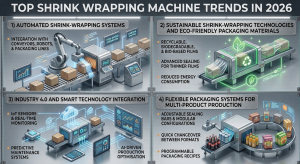
Across Australia, particularly in manufacturing and logistics hubs such as Perth, companies are modernising their packaging operations by investing in automated, sustainable, and digitally connected packaging machinery. Industries including food processing, pharmaceuticals, consumer goods, and e-commerce distribution are increasingly relying on shrink wrapping systems that deliver speed, flexibility, and precision.
In 2026, several important technological trends are shaping how shrink wrapper machines are designed, integrated into production lines, and used across modern manufacturing environments. The following innovations are driving the next generation of packaging efficiency.
Automated Shrink-Wrapping Systems
Automation is one of the most significant trends transforming the shrink wrap equipment market. As manufacturers face labour shortages and rising operational costs, automated packaging solutions are becoming essential for maintaining productivity and scalability.
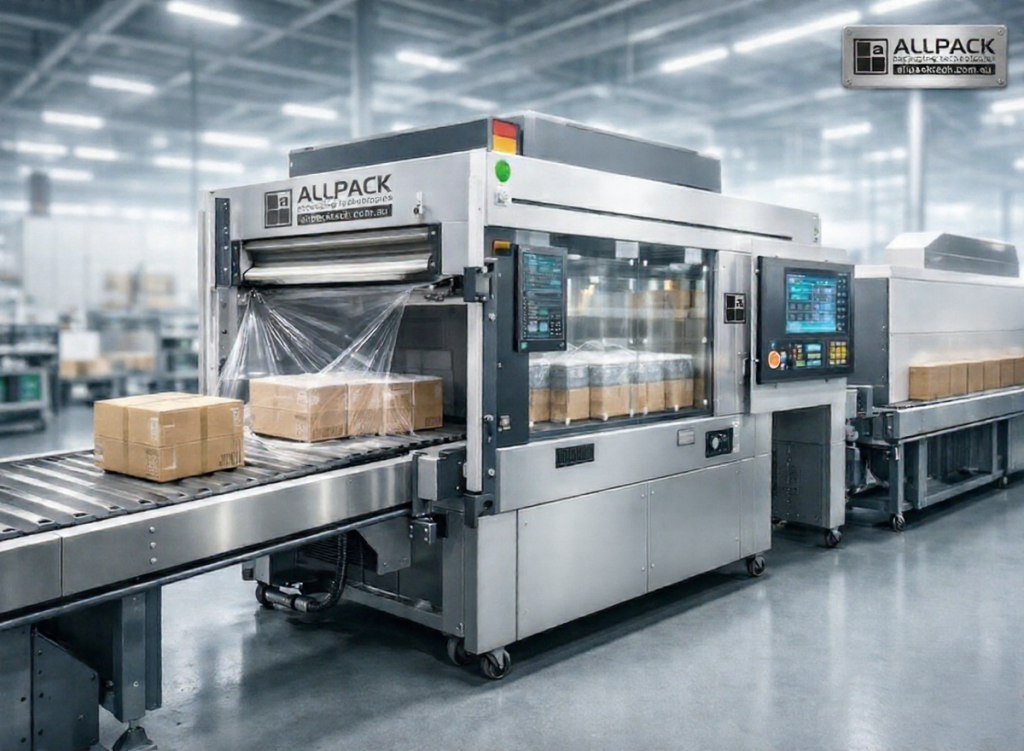
Modern automated shrink wrapping machines can integrate seamlessly with conveyors, robotic pick-and-place systems, product collators, and palletising equipment. This allows companies to create fully automated packaging lines capable of handling large production volumes with minimal manual intervention.
These automated packaging systems provide several key advantages:
- significantly faster packaging speeds
- consistent sealing and packaging quality
- reduced dependence on manual labour
- improved workplace safety
- lower long-term operational costs
High-speed shrink wrappers are particularly valuable in food and beverage manufacturing, pharmaceutical packaging facilities, and high-volume distribution centres, where packaging efficiency directly affects productivity and profitability.
Sustainable Shrink-Wrapping Technologies and Eco-Friendly Packaging Materials
Environmental sustainability has become one of the most powerful forces shaping packaging technology worldwide. Businesses are increasingly seeking packaging solutions that reduce material waste, minimise energy consumption, and support recyclable materials.
As a result, modern shrink wrapping machines are being designed to process recyclable, biodegradable, and bio-based shrink films without compromising packaging strength or sealing quality.
Recent innovations in shrink wrapping equipment have focused on improving film efficiency and reducing plastic usage. Advanced sealing systems now allow manufacturers to use thinner shrink films while maintaining strong product protection. This significantly helps reduce packaging material consumption.
Many modern machines also include:
- energy-efficient motors and drive systems
- advanced heat-tunnel control technologies
- intelligent power-management features
- optimised film tension control
These innovations help reduce both energy consumption and packaging waste which makes shrink wrapping technology more environmentally responsible.
Another major sustainability trend is the transition toward mono-material packaging structures.
It improves recyclability by eliminating multi-layer plastic combinations. This shift has increased demand for specialised shrink wrapping machines capable of sealing and processing these new materials effectively.
For Australian manufacturers looking to meet sustainability targets and comply with evolving environmental regulations, investing in eco-friendly shrink wrapping machines is becoming a critical part of modern packaging strategies.
Industry 4.0 and Smart Technology Integration
Digital transformation is rapidly reshaping the packaging machinery industry. And modern shrink wrapping machines are becoming smarter, more connected, and increasingly data-driven.
Many advanced packaging systems now incorporate artificial intelligence (AI), Internet of Things (IoT) sensors, and Industry 4.0 connectivity. This is enabling real-time monitoring and intelligent production optimisation.
Modern smart shrink wrapping machines commonly integrate technologies such as:
- Internet of Things (IoT) sensors
- Real-time machine performance monitoring
- Predictive maintenance systems
- AI-driven production analytics
These technologies allow operators to continuously track machine performance and detect potential issues before they lead to costly downtime.
For example, IoT-enabled shrink wrappers can monitor critical operating variables such as sealing temperature, film tension, machine speed, and energy consumption. When abnormal patterns are detected, the system can alert operators or automatically schedule maintenance to prevent production interruptions.
Artificial intelligence is also beginning to play an important role in packaging optimisation. AI-powered analytics can analyse production data to identify opportunities for improving packaging speed. This reduces material waste and increases overall line efficiency.
Beyond individual machine monitoring, modern shrink wrapping systems are also being integrated into Industry 4.0 smart manufacturing environments. In these connected production systems, packaging equipment communicates directly with other machines across the production line.
Through this integration, shrink wrapping machines can:
- automatically adjust packaging speeds based on upstream production output
- synchronise with conveyors, filling machines, and palletising equipment
- communicate with warehouse and production management systems
- generate real-time operational and maintenance data
This level of connectivity enables manufacturers to create data-driven production environments where packaging performance can be continuously monitored and optimised.
Flexible Packaging Systems for Multi-Product Production
Manufacturing environments today rarely focus on a single product type. Instead, many companies produce multiple product variations, packaging formats, and bundle configurations within the same facility.
This has created growing demand for flexible shrink wrapping machines that can adapt quickly to changing production requirements.
Modern shrink wrap systems now include several features that support flexible manufacturing, such as:
- adjustable sealing bars for different product sizes
- modular machine configurations
- quick changeover capabilities between packaging formats
- programmable packaging settings and recipes
These features allow manufacturers to switch between packaging configurations quickly without extensive downtime or complex mechanical adjustments. Thus, adopting flexible shrink wrap equipment helps manufacturers maintain high production efficiency while respond quickly to evolving market demands.
However, understanding these trends alone is not enough. To fully appreciate why companies are investing in advanced shrink-wrapping systems, it is important to examine the key market drivers accelerating the adoption of shrink wrapper machines. So, let’s dig in.
Key Market Drivers Accelerating the Adoption of Shrink Wrapper Machines
Technological and operational trends are transforming packaging systems worldwide. Behind these trends are powerful market drivers that are pushing businesses to invest in modern shrink wrappers.
Technological Advancements
Rapid technological innovation is one of the most significant forces shaping the global shrink wrap machine market.
Modern machines are now equipped with:
- advanced automation technologies
- programmable logic controllers (PLCs)
- intuitive digital interfaces
These technologies allow operators to control packaging processes with greater precision. Plus, they simplify machine operation while improving packaging speed, accuracy, and consistency.
Many new shrink wrapping systems also incorporate smart monitoring capabilities. This allows manufacturers to track machine performance in real time. By integrating sensors and connected systems, businesses can monitor production output, detect faults early, and schedule predictive maintenance before problems occur.
Some advanced packaging facilities are even implementing data-driven optimisation tools. This helps reduce downtime and improve overall equipment efficiency. These innovations enable businesses to maintain consistent packaging quality while increasing production capacity.
As manufacturing industries across Australia continue to modernise their operations, demand for technologically advanced shrink wrapping machines is expected to increase.
Expanding E-Commerce and Logistics Operations
Another major driver of the shrink wrap machine market is the rapid growth of e-commerce and global distribution networks.
Online retail continues to expand globally, with e-commerce sales increasing by roughly 20% annually in many markets. As a result, warehouses and fulfilment centres require efficient packaging systems capable of handling high volumes of products quickly and securely.
Shrink wrapping machines provide an ideal solution for e-commerce packaging because they help:
- stabilise product bundles during shipping
- protect items from dust, moisture, and handling damage
- create tamper-evident packaging for secure delivery
In Australia, the continued expansion of distribution centres and logistics infrastructure, including facilities in Perth and other major cities, is driving increased demand for automated packaging equipment.
Growth of the Food and Beverage Manufacturing Sector
The food and beverage industry remains one of the largest users of shrink wrapping technology.
As consumer demand for convenience foods, ready-to-eat meals, and packaged beverages continues to grow, manufacturers require reliable packaging systems that maintain product freshness and safety.
Shrink wrapping machines are widely used in food processing because they offer several advantages:
- secure and tamper-evident packaging
- extended shelf life through airtight sealing
- improved product presentation and visibility
- efficient bundling for retail distribution
The global food and beverage industry is projected to grow at approximately 5% annually over the coming years. This will continue to drive demand for modern packaging equipment.
Increasing Investment in Packaging Automation
Automation is another major factor driving the adoption of shrink wrapping machines.
Many manufacturing companies are facing labour shortages and rising operational costs. This has increased interest in automated packaging systems that improve productivity while reducing reliance on manual labour.
Automated shrink wrappers can be integrated directly into production lines. This will allow businesses to streamline packaging operations and increase output.
Key advantages of automated packaging include:
- higher production speeds
- reduced labour requirements
- consistent packaging quality
- improved workplace safety
Industry reports suggest that the global packaging automation market is expected to grow at nearly 10% annually. This reflects strong demand for automated solutions across manufacturing industries.
Growing Demand for Sustainable Packaging Solutions
Sustainability has become a major consideration for both businesses and consumers when choosing packaging solutions.
Environmental concerns and stricter regulations are encouraging manufacturers to adopt packaging systems that reduce waste and support recyclable materials.
Modern shrink wrapping machines are evolving to support eco-friendly packaging films, including recyclable, biodegradable, and mono-material packaging structures.
In addition, newer equipment is designed to minimise packaging material consumption through precision sealing technologies and improved film control systems. These features allow businesses to maintain product protection while using less plastic. As a result, companies are increasingly investing in sustainable shrink wrapping technology to meet these expectations while reducing their environmental footprint.
Strong Investment in Manufacturing Modernisation
Another important driver behind the shrink wrapping machine market is the ongoing modernisation of manufacturing infrastructure.
Industries across Australia are upgrading production lines to improve efficiency, maintain global competitiveness, and meet evolving packaging regulations. Government initiatives and industry collaborations are also encouraging investment in advanced manufacturing technologies.
For example, industry events and partnerships within Australia’s packaging sector continue to showcase new machinery and automation solutions for industries such as food processing, pharmaceuticals, and e-commerce fulfilment.
As manufacturers expand production capacity and adopt advanced equipment, demand for high-performance shrink wrappers is expected to grow steadily in the coming years.
Key Benefits of Adopting Shrink Wrapping Technology
Modern shrink wrapping machines deliver measurable advantages across food, retail, cosmetics, pharmaceutical, and industrial packaging operations by improving protection, efficiency, and cost control.
Better Product Protection and Longer Shelf Life
Shrink wrapping creates a tight protective seal that reduces moisture and oxygen exposure. This helps maintain product freshness, hygiene, and shelf life.
Reduced Material Usage and Packaging Waste
Advanced sealing systems allow thinner recyclable films to be used without compromising strength. This reduces plastic consumption and packaging costs.
Faster Packaging Speeds and Consistent Quality
Automated shrink wrappers increase throughput while delivering uniform seals and professional packaging presentation.
Lower Total Cost of Ownership (TCO)
Improved film efficiency, energy-efficient tunnels, and reduced labour requirements significantly lower long-term packaging costs.
Flexible Packaging for Multiple Product Formats
Modern shrink wrapping systems easily handle different product sizes, bundle configurations, and packaging formats with minimal changeover time.
Predictive Maintenance and Improved Uptime
IoT-enabled machines provide real-time monitoring and predictive maintenance. This reduces downtime and keeping production lines running efficiently.
Struggling with packaging bottlenecks, high film costs or unexpected downtime in your Perth production line?
Cut Packaging Costs & Downtime with Smarter Pallet Wrapping Machines at Allpack Packaging Technologies
Investing in the right shrink-wrapping solution shouldn’t be a leap in the dark.
At Allpack Packaging Technologies, we deliver smart wrapping systems that reduce film use, boost throughput, and keep your line running. Whether you need a compact hooded sealer for e-commerce fulfilment or a fully automated tunnel system for high-volume food production, we design solutions that pay back fast and scale with your business.
FAQs
What industries use shrink wrapping machines?
Shrink wrapping machines are used across food & beverage, pharmaceuticals, cosmetics, consumer goods, electronics and e-commerce fulfilment. They’re especially common where product protection, tamper evidence and neat retail presentation are required.
What is the difference between shrink wrap and stretch wrap?
Shrink wrap is a film that is heated so it shrinks tightly around the product (used for retail packs, multipacks and tamper-evidence). Stretch wrap is an elastic film stretched by hand or machine to hold pallet loads together (used for pallet stabilisation).
Are shrink wrapping machines eco-friendly?
Modern shrink systems can be eco-friendly when paired with mono-PE recyclable films, thinner-gauge materials and precise heat control that reduces film use and energy. Look for machines supporting recycled/mono films and energy-saving tunnel technology to maximise sustainability.
How do automated shrink wrapping machines improve efficiency?
Automation increases throughput, delivers consistent seal quality, reduces manual handling errors and enables predictive maintenance via IoT monitoring – all of which lower labour costs, rework and unplanned downtime.
How to choose the right shrink wrapper for my production line?
Match the machine to your peak packs-per-minute, film type, product size range and integration needs (conveyors, palletising, MES). Prioritise local spare-parts support, energy efficiency, quick changeover features and IoT readiness for future upgrades.