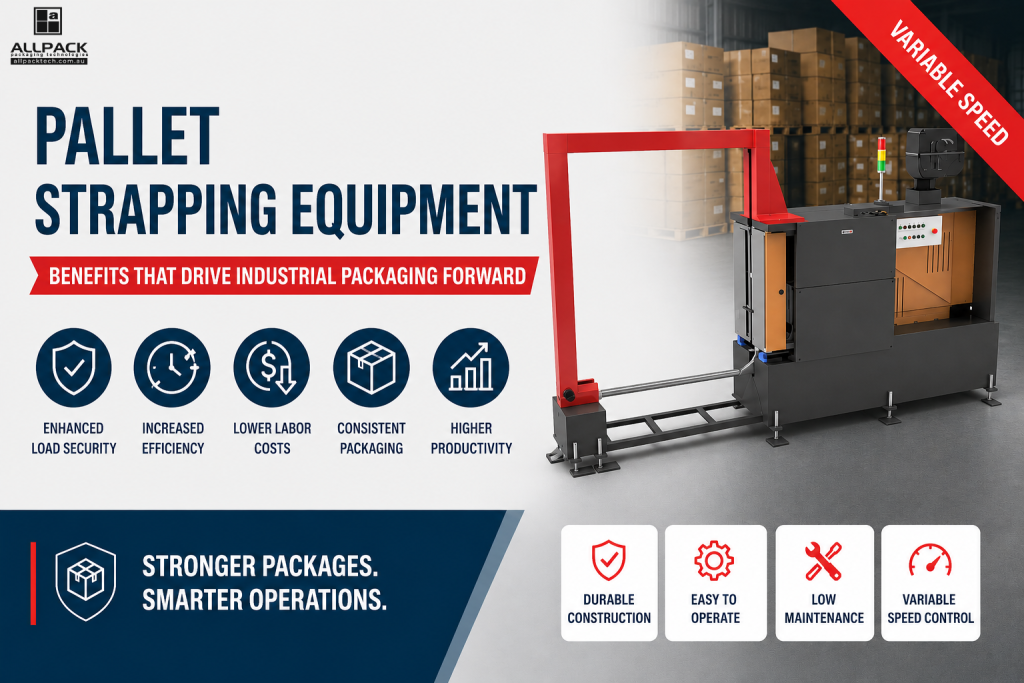
Modern pallet strapping equipment is helpful in securing loads more safely and efficiently. They protect products, speed up strapping, and reduce labour pressure.
In this blog, we will explain eleven practical benefits of strapping equipment, and you will understand why they are so important in everyday warehouse work. So let’s begin.
11 Benefits Of Using Modern Pallet Strapping Equipment
1- Better Load Stability
A pallet that shifts even a little can cause trouble in transit. It may lean, rub, settle unevenly, or lose shape before it reaches the customer. Modern strapping equipment helps stop that by applying the strap with more control and more repeatable tension. That is especially useful when you are handling mixed loads or products that do not sit perfectly flat. A manual tool can do the job, but a battery-powered or automatic system gives you a steadier result from pallet to pallet.
For heavier or awkward freight, the difference is even clearer:
- Manual tools suit smaller jobs and odd loads.
- Battery tools speed up repetitive work and make tension easier to control.
- Automatic machines help keep high-volume loads consistent.
2- Stronger Product Protection
Strapping is not just about stopping movement. It also helps protect the product itself. The right strap material and the right tool can reduce crushing, rubbing, and load break-up during handling. That matters on pallets with cartons, white goods, building supplies, or anything that may be moved more than once before delivery. PET strapping is often used for many pallet jobs, while steel still has a place for very heavy loads that need high break strength.
A good strapping setup protects the goods in a few practical ways:
- It keeps boxes from spreading
- It helps prevent edge damage
- It holds the load together during forklift handling
- It reduces the chance of rework or repacking later
3- Fast Strapping Process
This is one of the first benefits most teams notice. Modern tools cut down the little delays that build up across a busy shift. Instead of handling each step separately, battery tools can tension and seal quickly, while semi-automatic machines make regular pallet jobs much faster than hand strapping. Fully automatic systems push that even further because they are built for flow. Once the right setup is in place, the strapping station stops slowing the whole warehouse down.
That speed shows up in everyday work:
- Less time per pallet
- Less waiting between jobs
- Less re-doing loose straps
- More time for other packing tasks
4- Lower Labour Costs
When a job takes less effort, you need less labour tied up doing it. That does not always mean cutting staff. More often, it means the same team can move more freight without being pushed as hard. Manual strapping is fine for light use, but once the pallet count rises, it starts eating time. Battery tools and automatic machines take pressure off the floor because they reduce the physical effort and the number of steps needed for each load.
It also helps in a less obvious way: people are not stuck repeating the same heavy movement all day. That can make the work easier to manage, especially during busy dispatch runs or peak periods.
5- Improved Worker Safety
This benefit is often overlooked, but it matters a lot. Repeated manual strapping can be rough on shoulders, backs, wrists, and hands. It also brings sharp tools, a strap snap-back, and awkward bending into the picture. Modern equipment helps reduce that strain. Battery-powered strapping tools are designed to be more ergonomic, while automatic systems remove even more of the physical effort from the operator.
Safer work usually comes from small design changes, not one big fix:
- Less repetitive pulling
- Less bending and reaching
- Less hand force on every strap
- Less contact with sharp cutters and loose strap ends
6- Consistent Strapping Results
One pallet can be done perfectly by hand. The next one might be a bit too loose. That is the problem with relying too much on manual effort. Modern strapping equipment removes a lot of that guesswork. It gives you a more repeatable finish, which matters when you are sending out the same product day after day. The tension, seal, and strap placement are easier to keep steady, especially when different staff members are on the shift.
This kind of consistency does more than look tidy. It helps loads behave the same way in transit, which is a big deal when customers expect the same result every time.
7- Higher Packaging Productivity
When strapping becomes quicker and more predictable, the rest of the packing line feels it too. One of the biggest gains from modern equipment is flow. Semi-automatic machines are good for regular warehouse work. Automatic systems are better when pallets are moving through a line and packaging needs to keep pace with production. The right machine can remove a bottleneck that used to slow down dispatch every afternoon.
In practical terms, higher productivity means:
- Fewer delays at the end of the line
- Less time spent reworking bad straps
- More pallets are ready for dispatch in less time
8- Reduced Material Waste
Good equipment helps you use only what you need. That is a small detail, but it adds up fast across a busy site. Automatic systems are built to apply the right amount of strap, and proper tension control helps stop over-strapping or waste from do-overs. Poor manual work often uses more straps than necessary because the first attempt was not quite right. Better equipment keeps that under control.
It also reduces hidden waste:
- Fewer straps thrown out after mistakes
- Less product loss from loose or failed loads
- Less repacking after transit damage
9- Lower Maintenance Downtime
A strong setup is only useful if it keeps working. That is why serviceability matters. Australian packaging suppliers now back strapping systems with repairs, loan tools, spare parts, and maintenance support, which helps keep operations moving when something wears out. Battery tools can also reduce physical wear compared with rough manual handling, while well-built machines are designed for regular use in busy environments.
This is where the cheapest option often costs more later. A tool that is easy to service and easy to get parts for usually causes less disruption than a bargain unit that sits idle waiting for repairs.
10- Easy Business Scalability
A good strapping system should grow with the business. That is why many sites do not rely on only one type of equipment. They mix manual tools, battery tools, and automatic machines depending on the job. Small runs can still be handled manually. Higher-volume work can move across to powered or automated systems as orders increase. That makes growth less painful because you are not forced to rebuild the whole packing process every time volumes change.
A scalable setup also gives you breathing room. You can start with what suits today’s workload and step up only when the numbers justify it.
11- Better Long-Term ROI
The return on strapping equipment usually comes from several small wins, not one big saving. Faster handling, less labour pressure, fewer damaged loads, less waste, and lower downtime all build the case over time. A manual tool can be the right low-cost answer for light use. A battery tool often suits growing operations. A fully automatic machine makes more sense when the volume is high enough to keep it busy. The best ROI is not about buying the biggest machine. It is about matching the machine to the work.
Allpack Packaging Technologies – Pallet Strapping Equipment in Perth
At All Pack Tech, we supply pallet strapping equipment for manual, battery-powered, and fully automatic packaging operations. Have a look at some of our products to find the right solution for your warehouse.
Pallet Strapping Machine
A fully automatic pallet strapping machine for securing palletised loads in packaging and dispatch areas.
Built for PET and PP strap use in high-volume warehouse and production environments.
Battery-Powered Strapping Tool
A cordless strapping tool for fast PET and PP strap tensioning and sealing.
Suitable for manual pallet strapping and general industrial packing work.
Plastic Strap Tensioner
A manual PP strap tensioner for tightening strapping before sealing.
Best for simple hand-strap jobs in packing and dispatch areas.
Strapping Sealer
A hand-held sealer for closing the PP strap after tensioning.
Used with a tensioner in manual plastic strapping applications.
Need the Right Strapping Setup for Your Packaging Line? Contact All Pack Tech
You are more than welcome at Allpack Packaging Technologies for expert advice on modern pallet strapping equipment and the best solution for your workflow.
We are based in Perth and supply reliable packaging equipment for warehouses, production facilities, and dispatch operations across Australia.
FAQs
What is the best pallet strapping equipment for warehouse use?
The best option depends on your workload, but for most warehouses, a battery-powered tool or automatic machine gives the best mix of speed, control, and consistency.
What is the difference between a pallet strapping machine and a battery-powered strapping tool?
A pallet strapping machine is better for high-volume work, while a battery-powered tool is more flexible and suits day-to-day strapping jobs.
Should I use PET or PP strapping for pallet loads?
PET is usually the better choice for heavier pallet loads, while PP works well for lighter jobs and simpler packing work.
How does modern pallet strapping equipment improve safety and efficiency?
It reduces manual effort, speeds up the strapping process, and helps keep loads more secure, which makes warehouse work smoother overall.