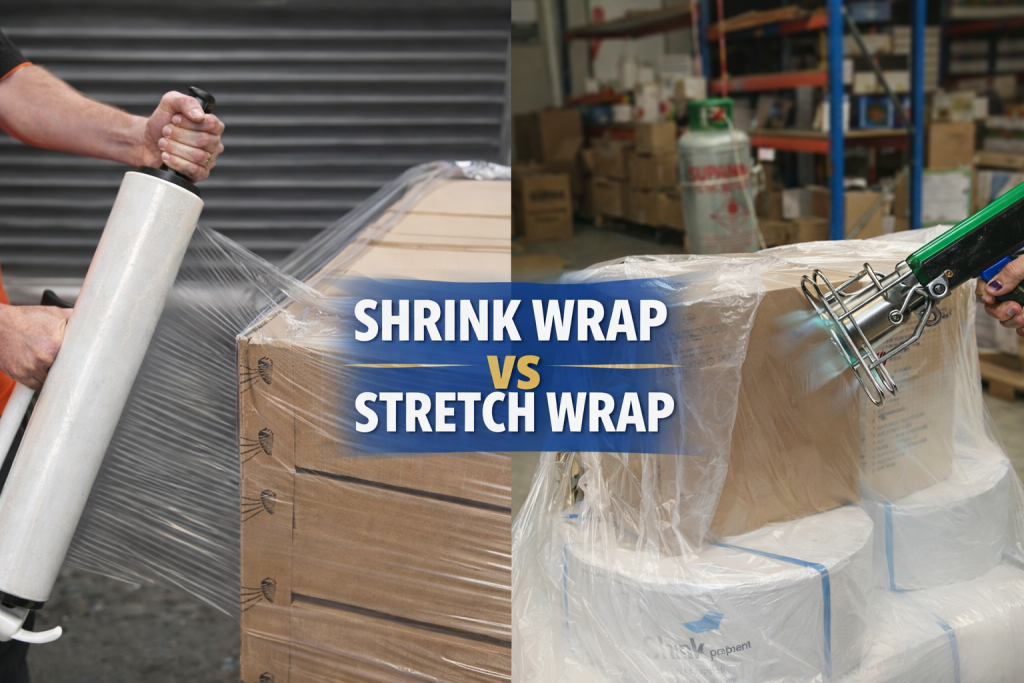
Shrink wrap is used in retail packaging and product protection because it creates a tight seal around an individual product using heat. In contrast, stretch wrap is used in securing large loads, especially palletized goods, because after applying tension, it stretches around the product and keeps the items stable during shipping and transport.
In this blog, we are going to discuss shrink wrap and stretch wrap in detail, and then we will explore the differences between these two packaging films. After reading the whole blog, you will be able to pick the right film for yourself.
First of all, let’s understand shrink wrap:
Introduction to Shrink Wrap
Shrink wrap is a heat-activated LDPE plastic film that fits tightly around a product when heat is applied using a heat gun or shrink wrap machine. It is used for retail packaging and bundling items. Shrink wraps are available in various thicknesses and sizes, including tubing and bags.
Shrink wraps are made from materials like polyolefin, PVC, or polyethylene; each one has its own use, but the goal is the same, and that is protection, presentation, and tamper evidence.
Where Shrink Wrap is Used
You’ll find shrink wrap being used in the following:
- Retail packaging (like boxed electronics, toys, books)
- Food packaging (sealed trays, bottled drinks)
- Multipacks (like water bottles or soda cans bundled together)
- Pharmaceuticals and cosmetics
- Gift packaging and presentation packs
In short, we can say that a shrink wrap will be appropriate to use if you want product visibility, protection, and a professional finish.
Now let’s talk about stretch wrap:
Introduction to Stretch Wrap
Stretch wrap is made from linear low-density polyethylene (LLDPE), which gives flexibility and strength at the same time. So it is used to secure palletized goods by applying tension and wrapping loads tightly without heat. Commonly applied with a hand dispenser or pallet wrapping machine, it comes in different thicknesses, strengths, and ventilated options for stable shipping and load containment.
So instead of heat, a stretch wrap works using tension, which is why when you wrap it around something, it tries to go back to its original shape, and that’s what keeps the product tight and secure.
Where Stretch Wrap is Used
You’ll see stretch wrap in warehouses, logistics, and transport environments.
- Wrapping pallets of goods
- Securing cartons for shipping
- Warehouse storage
- Moving and relocation
- Industrial packaging
If you’re moving houses and you’ve stacked a number of boxes on top of each other. Then a stretch film will be used to wrap them tightly so they don’t fall during transport. In short, we can say that stretch wrap is used for strength and stability rather than giving a perfect visual finish to your product.
Note that stretch film isn’t the same as the cling film you’d use in your kitchen — see how stretch film and cling film differ if you’re unsure which one fits your situation.
Shrink Wrap vs Stretch Wrap Explained: Key Differences
Both wraps are basically plastic films used to protect products, but they work in entirely different ways. Let’s have a look:
Types and Varieties
Shrink wrap comes in different types based on material and thickness.
- PVC shrink wrap: It is cheaper and used for lightweight products
- Polyolefin shrink wrap: It is widely used and safe for food.
- Polyethylene shrink wrap: It is relatively thick and used for heavy-duty packaging
Stretch wrap also has its own types. Let’s have a look at some of them:
- Hand stretch wrap: It is used manually
- Machine stretch wrap: It is used with wrapping machines
- Blown stretch film: It is stronger but expensive as well
- Cast stretch film: It is a high-clarity packaging film
Shrink Wrap vs Stretch Wrap: Cost & Pricing Comparison
Shrink wrap usually costs more because you need heat equipment (a heat gun or a shrink tunnel) to use it. In contrast, a stretch wrap is comparatively cheap because no heat is required for application. Furthermore, it is easy to apply and is ideal for bulk packaging
It is important to mention here that cheap doesn’t always mean better, like if you use stretch wrap where shrink wrap is needed, your product will get messy or unprofessional. Similarly, if you use shrink wrap for pallet loads, you will definitely waste your time and money.
Material Characteristics and Properties
A stretch wrap has better load retention and shock absorption, which is why it’s used in transport. On the other hand, a shrink wrap gives better aesthetic appeal and product protection. Have a look at more of their salient features:
Shrink wrap:
- Shrinks tightly with heat
- Provides a sealed, tamper-evident finish
- High clarity (you can see the product clearly)
- Less flexible after shrinking
- Good for individual packaging
Stretch wrap:
- Stretches and holds tension
- High elasticity
- Strong cling (sticks to itself)
- Resistant to tearing and punctures
- Best for bundling and securing loads
Tips for Picking the Best Packaging Film
If you want a clean, sealed look for one product, shrink wrap is the better choice. It will give the item a tight finish and protect it from dust and tampering. Stretch wrap will be a smart option if you need to hold many items together or you have to keep boxes stable during delivery.
Also, choose the wrap based on your packaging goal; if your focus is on stability and holding multiple items together, stretch wrap is the better option. On the other hand, go with a shrink wrap if you are sealing individual products or you need a better presentation.
If you’ve decided stretch wrap is right for your pallets, the next step is choosing the right equipment — explore the different types of pallet wrapping machines to find the one that matches your volume.
Get the Best Packaging Solution with Allpack Packaging Technologies
At Allpack Packaging Technologies, we have been helping Aussie businesses since 2000 with our reliable packaging machines that improve packing speed and day-to-day efficiency. So, if you need shrink wrapping or stretch wrapping solutions, give us a call, and our team of experts will help you choose the right machine for your products.
FAQs
What is the main difference between shrink wrap and stretch wrap?
Shrink wrap shrinks with heat to tightly seal a product, while stretch wrap stretches and wraps around items to hold them together without heat.
Which is better for shipping products?
Stretch wrap is better for shipping large loads or pallets because it keeps everything stable during transport.
Want to know more about why businesses prefer it? See the full list of stretch film benefits.
Is shrink wrap safe for food packaging?
Yes, especially polyolefin shrink wrap, which is commonly used for food products because it’s safe and durable.
Can I use stretch wrap for retail packaging?
You can, but it won’t look as clean or professional as shrink wrap, so it’s not ideal for retail display.
Which one is more cost-effective?
Stretch wrap is usually cheaper and faster to use, but shrink wrap gives better presentation, so the best choice depends on your needs.